
Electrical distribution networks (EDNs) across South Africa are becoming more complex each year. Utilities, municipalities, mining operations and industrial plants face new protection challenges as solar PV, embedded generation, long rural feeders, VFD-heavy loads, and mixed grid-backup systems all operate on the same electrical infrastructure.
In this environment, feeder protection and earth leakage protection play a central role in maintaining reliability, safety and uptime. Yet many networks still rely on older relays (GA, GA+, GA MS0, 320 Series or equivalents) that were never designed for today’s harmonic-rich, inverter-dominated and bidirectional power systems.
This article outlines what engineers should understand in 2026 about feeder protection, earth-fault sensitivity, PQ disturbances, and the correct selection between GA, GA+, GA MS0, KG Relay, KH Relay and NewFeed alongside where these relays fit into modern EDNs.
Why Feeder Protection Matters More in 2026
South Africa’s distribution networks experience unique stresses:
- Long rural cables and overhead lines that increase impedance and earth-fault difficulty
- Solar-driven reverse power flows
- Voltage dips from remote faults or load shedding
- Harmonic distortion from drives and inverter-based systems
- Ageing transformers and switchgear operating at reduced fault levels
A GE reference on feeder protection notes that “microprocessor-based relays improve distribution operation through flexibility and programmability” in exactly such evolving fault environments. This aligns with current utility needs, where protection must react reliably to both classical faults and modern PQ disturbances.
More importantly, incorrect feeder protection can cause:
- Nuisance tripping
- Failure to detect high-impedance earth faults
- Motor overheating due to unbalance
- False trips when VSDs or solar inverters distort waveforms
- Unstable switching between grid and backup generation
Traditional overcurrent and earth-fault elements alone are no longer enough.
Earth Leakage Protection in EDNs: Fundamental but Often Misunderstood
Why Earth Leakage is Still Critical
Earth leakage protection prevents:
- Electric shock
- Fire hazards
- Cable insulation breakdown
- Transformer stress and partial discharge events
However, in complex networks, engineers frequently struggle with:
- High-impedance earth faults on long cables
- VFD-driven motor circuits producing capacitive leakage currents
- Solar inverters generate high-frequency leakage
- Multiple sources (grid + generator + UPS) altering fault levels
A common challenge is distinguishing real faults from harmonic-induced or capacitive leakage currents.
A technical study on VFD circuits found that inverter switching causes “elevated leakage currents due to cable capacitance,” which can trigger earth-fault or earth-leakage relays unnecessarily. This explains many nuisance trips in industrial MCCs or pump stations.
Why Nuisance Trips Increase in Modern EDNs
Nuisance earth-fault trips usually arise from:
- VSD feeders and non-linear loads
- Long cable runs with high capacitive charging
- Engines restarting after dips
- Harmonics from PV inverters
- Oversensitive earth-fault settings
- Incorrect relay selection for the application
Earth leakage devices that were perfect for the 1990s distribution environment now encounter entirely different waveform shapes, harmonic content, switching behaviour and backfeed conditions.
This is where choosing the right NewElec relay becomes essential.
Understanding the GA, GA+, GA MS0 the KG and KH Relays in Today’s Networks
NewElec’s 30-year relay lineage (notably the 320 Series) has been a reliability standard across South African utilities, mining networks and industrial MCCs. These relays remain relevant today but selecting the correct unit for the correct application is essential.
Below is a modern engineering breakdown of where each relay fits in 2026.
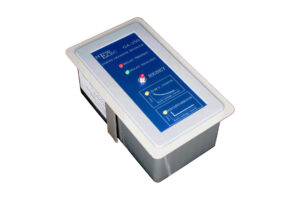
1. GA Relay (Legacy Motor/Feeder Earth Leakage Relay)
The GA remains a reliable and cost-effective option for:
- Small MCC circuits
- Low harmonic environments
- Applications with predictable load profiles
It is suited for LV distribution where harmonic content and inverter presence are low.
Use GA when:
- The network is stable with minimal VFDs.
- Cable lengths are short.
- Harmonic content is low.
- Earth faults are likely to be high-current and easy to detect.
Avoid GA when:
- VSDs or solar inverters dominate the load.
- Long cable feeders create high background leakage.
- Sensitive applications need better filtering.
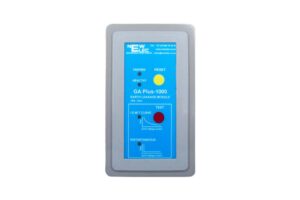
2. GA+ Relay (Enhanced Earth Leakage Relay)
The GA+ improves on GA and adds features needed in harsher environments.
It is suited to:
- Industrial MCCs with moderate VSD penetration
- Pumping stations with mixed loads
- Municipal applications with moderate harmonic content
Why engineers choose GA+:
- Better noise rejection
- Improved filtering
- More accurate earth-fault detection
- Better stability on VSD circuits
- Backed by NewElec’s reliability record in mining and water plants
Use GA+ when:
- VFD-based pump stations experience nuisance trips
- Solar inverters are present but not dominant
- Cable runs are medium-length
- Earth faults may be modest but still detectable
- On-board Test Functionality is a requirement
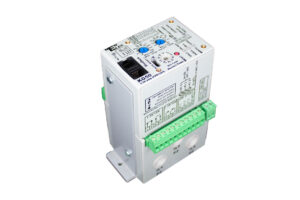
3. GA MS0 Relay (Motor-Centric Protection with Overload + Earth Fault)
The GM0 combines:
- Thermal overload
- Earth-fault
- Motor-protection functions
- Integrated 63mm Core Balance Current Transformer
This makes it ideal for:
- Industrial MCCs
- Pumps, fans and compressors
In 2026, it remains one of the most trusted MCC protection devices in South Africa’s industrial sector.
Use GA MS0 when:
- You need both earth leakage and earth-fault protection
- Drives are used but not excessively
- Overload curves need tighter management
Where GA MS0 may need upgrading:
- In solar-integrated networks
- On applications with high harmonic content
- When PQ events occur frequently
- When monitoring and diagnostics are needed
4. KG and KH Power Quality Monitoring Relays (Sensitive Earth Leakage for Feeder Protection)
The KG Relay KH Relay is widely respected for sensitive earth leakage protection, especially in:
- Municipal reticulation networks
- Industrial feeders with long cable runs
- Pump stations
- Rural networks with high impedance faults
Its ability to detect low-level earth-fault currents makes it ideal in EDNs where high-impedance earth faults are a known risk.
A published study notes that long cable feeders reduce earth-fault current significantly, making sensitive detection critical.
Use KG Relay KH Relay when:
- Cables are long
- High-impedance faults are expected
- PQ is moderately unstable
- You need selective feeder-level earth-fault detection
KG and KH Relays are rising above as one of NewElec’s newer, most trusted EDN devices and remains widely used in utilities.
When Modern Networks Demand More: Enter the NewFeed Relay
Some networks now require more than classical overcurrent + earth leakage.
If the EDN includes:
- Solar PV or embedded generation
- BESS or UPS
- Heavy VFD usage
- Harmonics
- Inverter-based loads
- PQ disturbances
- Reverse power flow
- Multiple supply sources
Then the NewFeed Relay becomes the appropriate choice.
Unlike GA/GA+/GA MS0 standalone Earth Leakage Protection Relays, the NewFeed Relay offers:
- Directional protection
- Reverse-power supervision
- Harmonic / THD monitoring
- Voltage/frequency control
- Advanced filtering for inverter environments
- Starter integration
- SCADA/communication options
- PQ diagnostics for fault analysis
This aligns with global guidance that modern feeder relays must handle unusual faults, harmonics and changing grid conditions.
Engineering Scenarios for Correct Relay Selection in 2026
Scenario 1 – Rural Municipal Feeder with Long Cable Runs
- High-impedance earth-fault risk
- Limited harmonics
- No embedded solar
Recommended: KG and KH PQM Relays
Why: Superior sensitivity on long feeders.
Scenario 2 – Industrial MCC with VSD Pumps and Compressors
- VFD leakage currents
- Moderate harmonics
- Occasional dips
Recommended: GA+ or GA MS0
Why: Better filtering and stability.
Scenario 3 – Solar-Integrated Water Treatment Facility
- Solar inverters feeding into a common bus
- Drives and long feeders
- Generator backup
Recommended: NewFeed
Why: Directional power, harmonics, PQ insight.
Scenario 4 – Mining Conveyor System
- Heavy motors
- Dusty environment
- Load cycling
Recommended: KG and KH PQM Relays
Why: Overload + EF protection suited to motors.
Scenario 5 – Utility Substation with Mixed Loads
- PV export
- Long feeders
- Non-linear loads
Recommended: NewFeed + KG and KH Relay combination
Why: Sensitive earth-fault + advanced feeder diagnostics.
Why Nuisance Tripping Happens (and How NewElec Relays Solve It)
Nuisance trips remain one of the biggest EDN problems in South Africa.
Common causes include:
- Long Cables – High capacitive charging leads to residual currents that mimic earth faults.
- Harmonics – Non-linear loads generate leakage currents at multiples of 50Hz.
- VSDs – Switching patterns can cause both low-frequency and high-frequency leakage.
- Solar Inverters – Inverters produce DC offsets and harmonics that older relays cannot interpret correctly.
- Incorrect Relay Selection – Using GA where GA+ where KG or KH PQM Relay is needed causes most nuisance trips.
- Oversensitivity – Earth leakage settings are often too low for modern feeders.
The correct relay matched to the load type, harmonic environment and cable length eliminates 90% of these issues.
Electrical Distribution Q&A Page
Where the Eskom-Approved Relay List Fits In
Many of the NewElec relays (NewFeed Relay, 320 Series Relay, NewCode as well as NewCode Dual Ethernet Relay as well as KD Series) appear on Eskom-approved relay lists and have 30+ years of field reliability.
This gives engineers confidence that:
- Trip curves match utility protection rules
- Tested performance meets national requirements
- The relay behaviour is predictable under fault conditions
- Field teams understand installation and commissioning procedures
In 2026, Eskom’s shift toward embedded generation and inverter-rich feeders makes the continued use of approved and trusted relay families even more important.
Feeder & Earth Leakage Protection for a New Generation of EDNs
By 2026, electrical distribution networks will require protection solutions suited to long-cable feeders, solar penetration, VSD-heavy loads, inverter harmonics, and hybrid power systems.
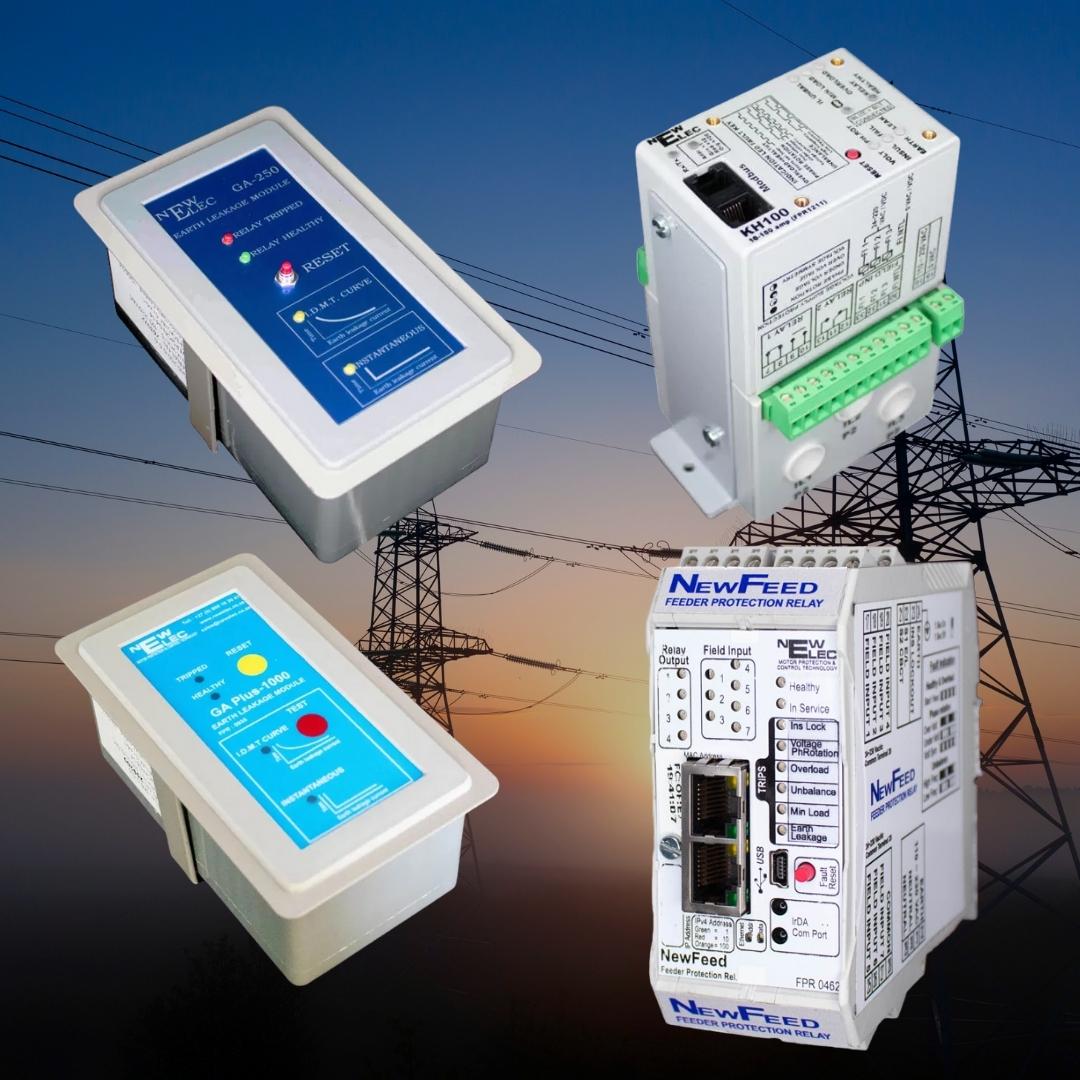
NewElec’s protection lineup, GA, GA+, GA MS0, KG/KH Relays and NewFeed Relay, provides this coverage across every scenario:
- GA Earth Leakage Protection Relay→ Standard LV earth leakage
- GA+ Earth Leakage Protection Relay → Enhanced filtering for VSDs with integrated test functionality
- GA MS0 Earth Leakage Protection Relay→ EF protection with integrated CT
- KG and KH PQM Relays → Sensitive feeder earth-fault detection
- NewFeed → Modern solar/Grid/Backup feeder protection
Together, they offer a complete framework for EDN reliability in the 2026 operating environment.
Frequently Asked Questions (FAQs)
Why is feeder protection more important in 2026 than before?
Because South African EDNs now include solar PV, VFD-heavy industrial loads, embedded generation and mixed backup systems, feeders experience more harmonic distortion, voltage dips and directional power flow. Modern feeder protection must detect high-impedance earth faults, stabilise PQ disturbances and prevent nuisance tripping functions that older relays were not designed for.
What causes nuisance trips in long-cable or VSD-driven feeders?
Nuisance trips often occur when capacitive charging currents on long cables, VSD switching patterns or inverter harmonics mimic earth leakage. If the relay cannot filter these signals correctly, it will interpret them as real faults. Devices like GA+ and KGK improve filtering and sensitivity, while NewFeed handles inverter-dominated systems more accurately.
When should an engineer choose GA vs GA+ vs GA MS0?
- GA: Stable LV circuits with low harmonics and short cables.
- GA+: Mixed-load feeders, pump stations or VSD environments where filtering is needed.
- GM0: Earth-fault protection with integrated CBCT. Selection depends on cable length, PQ conditions, motor loading and the presence of drives or inverters. Engineers should reference the Product Comparison Page when making a final decision.
How does KG Relay and KH Relay differ from standard earth leakage relays?
KG and KH PQM Relays are designed for sensitive earth-fault detection and Power Quality Monitoring on long feeders or networks where fault current may be low. It excels at detecting high-impedance faults common in municipal reticulation, rural networks and water treatment systems. It is more sensitive and stable than standard relays in these conditions.
When is the NewFeed Relay the correct upgrade path?
The NewFeed Relay is recommended for any feeder exposed to:
- Solar PV export
- BESS or UPS inverters
- Significant harmonic content
- Reverse power flow
- Multiple supply sources (grid + generator + battery) It provides directional elements, PQ analytics and harmonic monitoring, making it suitable for modern EDNs where classical relays like GA, GA+, GA MS0 standalone Earth Leakage and Protection Relays reach their limits.


