

Advanced Protection → Proven Reliability
The NewFeed Relay is engineered for LV and MV electrical distribution networks where reliability, power quality visibility, and mixed motor–feeder environments require precise, application-driven protection.
This deep dive explains how the NewFeed strengthens electrical distribution performance, reduces nuisance trips, improves PQ visibility, and simplifies control logic across substations, utilities, renewables, and industrial systems.
For full specifications, see the NewFeed Relay product page:
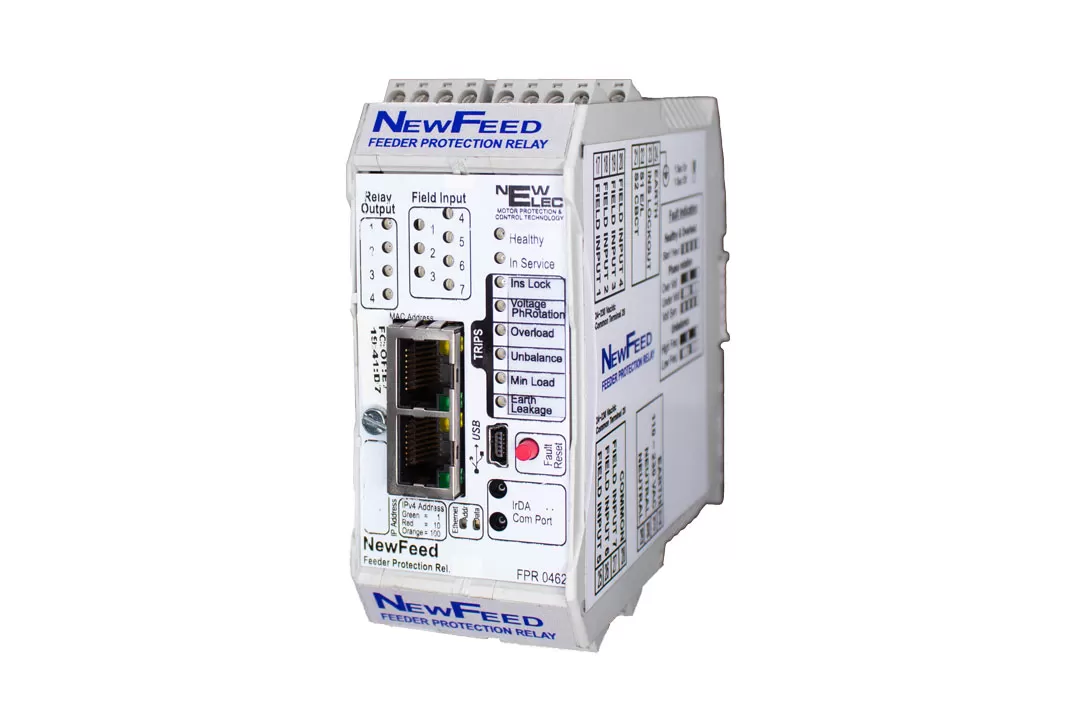
Why the NewFeed Relay Was Designed
Electrical distribution today faces increasing instability: longer feeder runs, PQ disturbances from embedded generation, harmonic distortion from VFDs, and mixed starter arrangements across industrial DBs. Traditional relays struggle in these environments because they offer only partial protection or lack the necessary power-quality insight.
The NewFeed Relay solves this by combining:
- ANSI-based feeder and motor protection
- Built-in harmonic and sequence component analysis
- Integrated starter control (DOL, star–delta, Dahlander, soft starter, reversing)
- Modular inputs/outputs and expansion
- Communication-ready intelligence for SCADA/PLC integration
- Detailed event, fault, and data recording
- All-in-one compact protection IED ideal for LV/MV distribution.
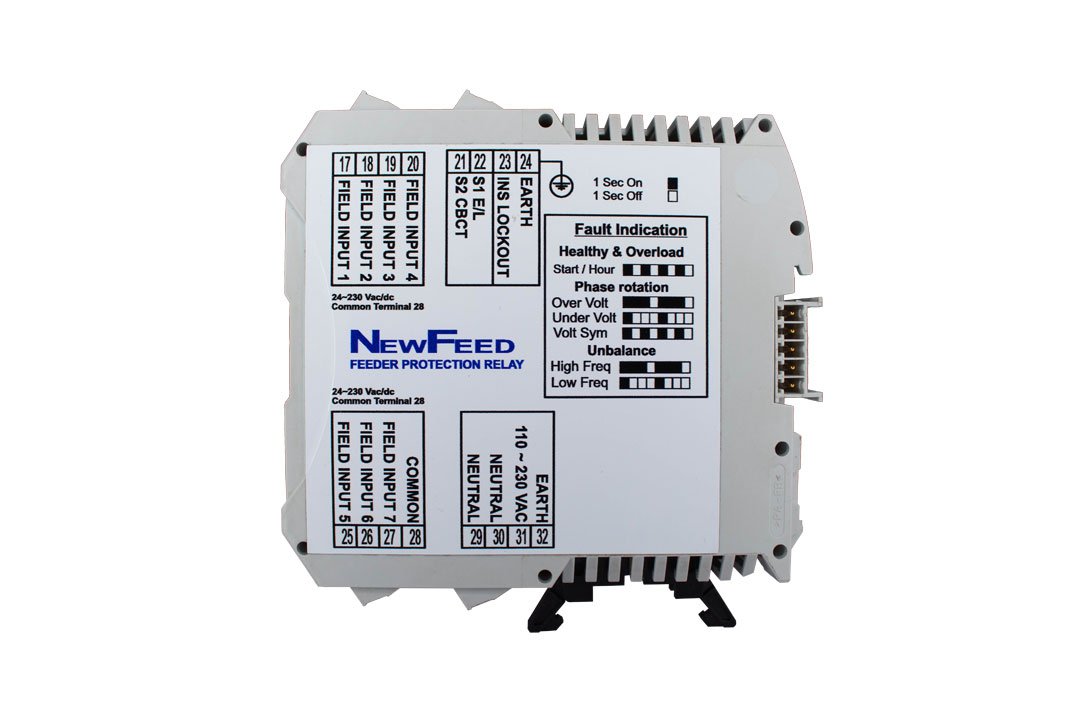
Where the NewFeed Fits Inside Electrical Distribution
The NewFeed Relay stabilises and protects systems such as:
- Utility & municipal feeders with long cable runs
- LV/MV substations requiring sequence imbalance detection and PQ visibility
- PQ-sensitive industrial distribution boards, especially with VFD-heavy loads
- Embedded generation systems (solar, wind farms) , where switching is frequent
- Motor–feeder combinations using DOL, star–delta, Dahlander or soft starters
Visit the Electrical Distribution industry page:

Understanding the Problem: Common Causes of Distribution Instability
Distribution engineers typically face issues such as:
- Voltage dips and sags
- Long-line feeder nuisance trips
- Harmonic distortion from drives and inverters
- Sequence imbalance during uneven loading
- Insulation degradation and earth leakage escalation
- PQ-related nuisance trips during grid/generator/UPS transition
The NewFeed Relay is built to detect, analyse, and log these events in real time, allowing faster diagnosis and better uptime.
How the NewFeed Relay Strengthens System Reliability
Integrated Motor + Feeder Protection in One Relay
Most plants use a combination of pumps, fans, drives, and feeders. The NewFeed consolidates all protection into a single IED, reducing wiring, commissioning time, spares, and troubleshooting complexity.
Built-In Starter Control
Harmonic Analysis up to the 37th
Sequence Component Measurement (V/I)
Event, Fault & Data Recording
Communication-Ready Intelligence
Application Examples
Utility Feeders
Reduced nuisance trips through harmonic + sequence imbalance detection.
Substations (LV/MV)
Incomer and feeder protection with PQ visibility.
Renewables & Embedded Generation
Harmonic analysis improves inverter-system stability.
Industrial Distribution
Simplifies protection in mixed starter environments with VFD influence.
Why the NewFeed Relay Matters for Grid Stability
Grid stability challenges are increasing across South Africa and the wider SADC region. With more solar, hybrid, and variable loads connecting to the network, traditional feeder protection often fails to handle modern PQ disturbances, harmonics, and fast-changing fault conditions.
In this video, we explain why the NewFeed Relay is becoming a critical component for stable, reliable feeder protection.
You’ll learn how it improves coordination, enhances PQ visibility, prevents nuisance trips, and protects both equipment and operators in today’s complex distribution systems.
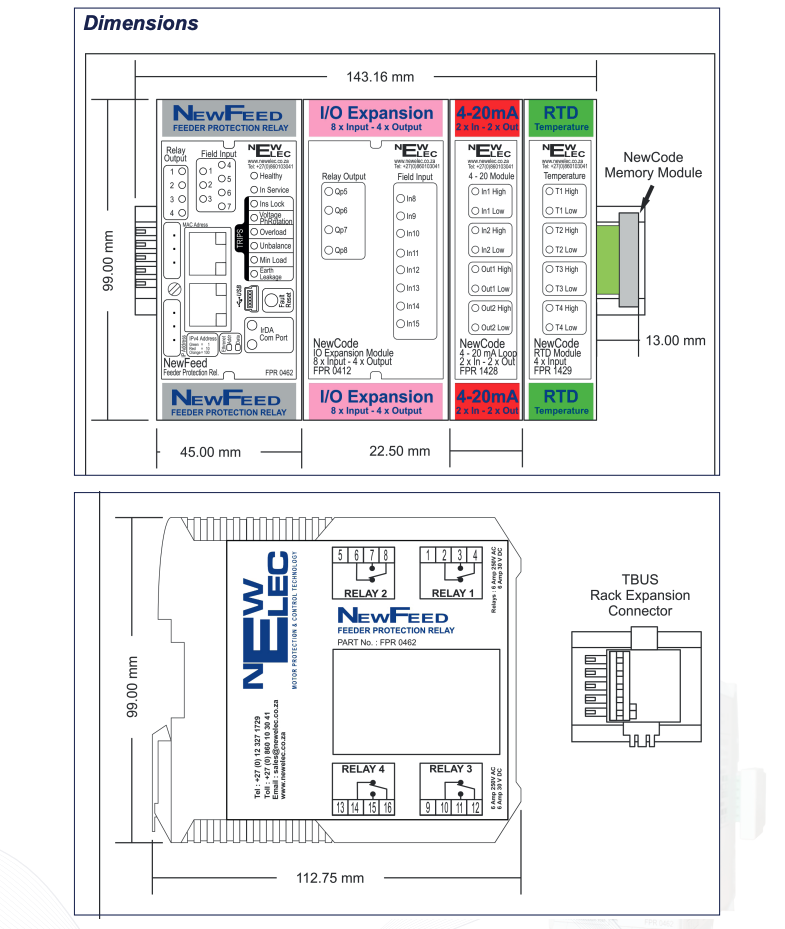
Models & Expansion Options
Base Unit
NewFeed Relay (FPR0462)
For motor and feeder protection with advanced PQ and starter control.
Current Modules
NC-01, NC-05, NC-25, NC-50, NC-100, NC-300 (0.1 A to 300 A)
Core Balance CT Options
Round and rectangular designs for earth-fault supervision.
Expansion Modules
- Memory Module
- Expanded I/O Module
- RTD Module (PT100, PT1000, NTC, PTC)
- 4–20 mA Module
See comparable relay options:
Measured Outcomes in Electrical Distribution
Fewer nuisance trips on long feeders and PQ-sensitive circuits
Clear PQ diagnostics with harmonic and sequence analysis
More stable operation during switching between grid ↔ renewable energy sources
Reduced commissioning time using simulation mode
Faster replacement with the plug-and-play memory module
Improved plant uptime through detailed logs and faster root-cause tracing
Testimonial/Case Study
FAQ
What makes the NewFeed different from standard feeder relays?
It combines motor + feeder protection, PQ analysis, sequence measurement, and starter control in one relay.
Does it support soft starters and star–delta?
Yes, including DOL, star–delta, Dahlander/pole-changing, soft starters, and reversing starters.
How does it reduce nuisance trips?
Through harmonic measurement, sequence imbalance detection, detailed logs, and advanced timing logic.
How many historical records can it store?
Up to 940 events and 40 faults, all fully time-stamped.
Can it integrate with SCADA and PLC systems?
Yes via Profibus, Modbus RTU, Modbus TCP, and PROFINET
Why Application-Driven Thinking Beats Spec-Sheet Selection
Just as with motor protection relays, feeder and PQ challenges vary from:
VFD-rich industrial DBs
Long municipal feeders
Solar-tied LV boards
Generator-backed circuits
Choosing a relay based on features alone is risky.
The right approach is context-first engineering selection, which is exactly what this deep dive is designed to support.
Watch the thought-leadership video on application-driven relay selection (link placeholder).
Download Our Technical Guide
Please complete the form below to gin access and download the Technical Guide PDF.
Related resources
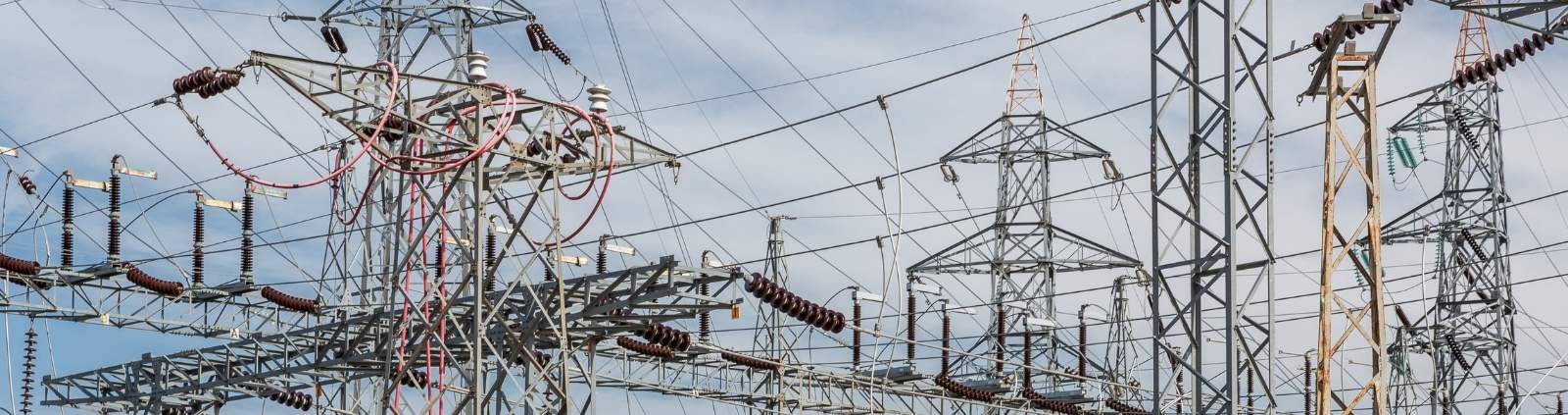
Feeder & Earth Leakage Protection for Electrical Distribution Networks: What Engineers Should Know in 2026
Electrical distribution networks (EDNs) across South Africa are becoming more complex each year. Utilities, municipalities, mining operations and industrial plants face new protection challenges as solar PV, embedded generation, long rural feeders,…
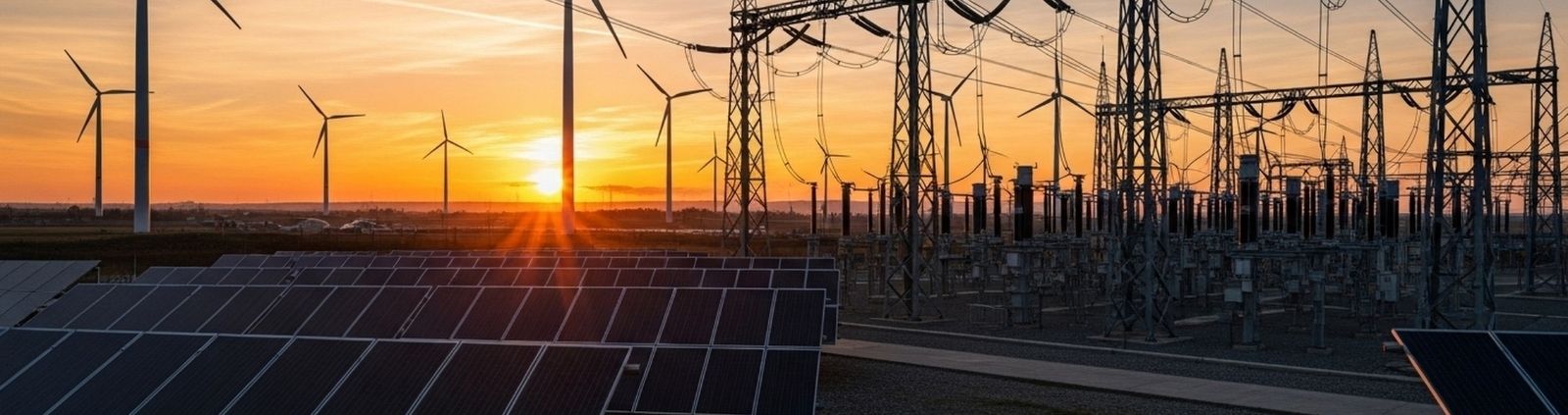
How the NewFeed Relay Strengthens Solar, Grid and Backup Power Systems in South Africa
South Africa’s electrical landscape is undergoing rapid evolution. Solar PV installations, grid feeders, and backup generation systems are increasingly operating together in hybrid configurations. This shift brings new protection challenges: reverse power..
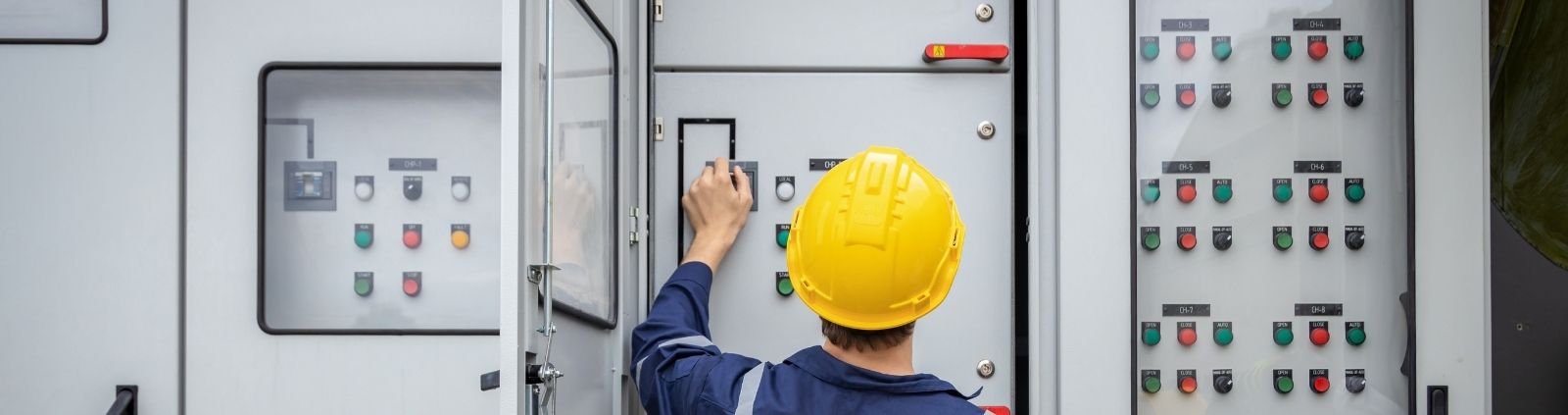
Q&A Content Piece - What is Electrical Distribution Protection, and why does it matter for substations, solar, grid and backup systems?
Low- and medium-voltage distribution networks carry the power that keeps plants, mines, municipalities, and solar farms running. When protection is not designed or coordinated correctly, a single fault on one feeder can trip who…
Talk to An Engineer


