

In manufacturing and industrial environments, protecting equipment from unforeseen electrical issues is a critical responsibility. Thermal Overload Relays are one of the most effective tools available for this purpose. These devices are designed to safeguard motors and other electrical components, ensuring they function safely and efficiently even under challenging conditions.
This article explores the fundamental role of overload thermal relays, their operating principles, their importance in modern industrial applications, and their key benefits. It also answers commonly asked questions to deepen understanding and assist in selecting the most suitable relay for your needs.
The Importance of Thermal Overload Relays
Preventing Overheating in Motors
Motors are indispensable in manufacturing, driving critical processes with precision and reliability. However, when subjected to excessive currents, motors can overheat, leading to potentially catastrophic failures. Thermal overload relays act as the first line of defence against overheating by continuously monitoring the motor’s current draw and cutting off power when it exceeds safe levels.
This functionality is crucial because overheating not only damages motor windings but also compromises associated components like bearings and gears. By mitigating such risks, overload thermal relays contribute significantly to maintaining operational stability.
A Cost-Effective Protection Solution
While alternatives like circuit breakers and more advanced electronic systems exist, thermal overload relays are valued for their simplicity and affordability. These devices offer a straightforward and reliable method for protecting motors without the high costs associated with more complex systems. Their accessibility ensures they remain a preferred choice for engineers seeking robust yet economical motor protection. Understanding how thermal overload relays work is essential to appreciating their role in safeguarding motors across various applications.
How Overload Thermal Relays Work
Thermal overload relays are built around a straightforward principle: monitoring heat generated by current flow. At the core of many relays is a bimetallic strip, a component that bends or flexes when exposed to heat. As the motor operates, current flows through the relay, generating heat proportional to the electrical load. If the current exceeds a predetermined threshold, the bimetallic strip bends to a point that triggers the relay, cutting off power to the motor.
This automatic response ensures that motors do not run beyond safe limits. The mechanism also accounts for temporary surges, as relays are calibrated to differentiate between brief spikes and sustained overload conditions.
Electronic overload relays, in contrast, utilise advanced sensors to monitor current fluctuations with greater precision. These devices can diagnose faults, log operational data, and provide real-time alerts, making them ideal for industries requiring highly accurate and customisable motor protection.
Types of Thermal Overload Relays
Thermal overload relays come in several types, each suited to specific industrial applications. NewElec provides
a range of overload relays tailored to meet diverse industry needs, including:
- Single-Phase Motor Protection Relays
These relays are designed specifically for single-phase motors, offering precise overload protection to prevent overheating and extend motor life. They are commonly used in small industrial and residential applications.
- Three-Phase Motor Protection Relays
Three-phase motor protection relays offer robust safety features for larger industrial motors. They provide consistent protection in heavy-duty applications such as manufacturing, mining, and water management, where three-phase motors are the standard.
- Electronic Overload Relays
For industries requiring advanced precision and monitoring, NewElec offers electronic overload relays. These relays feature enhanced diagnostic capabilities, allowing for real-time monitoring, fault analysis, and superior adaptability to varying load conditions.
NewElec’s offerings cater to a wide array of operational needs, ensuring efficient and reliable protection for motors across different industries. For more information, explore their Product Kits or Kits by product on the product page. By selecting the appropriate type, engineers can tailor motor protection to the specific demands of their applications.
Integration with Motor Starters
In industrial setups, thermal overload relays are typically combined with contactors to form motor starters. This integration simplifies motor control and protection, allowing for coordinated operation and safeguarding against hazards like short circuits and overloads. Motor starters equipped with thermal overload relays are a staple in manufacturing plants, ensuring seamless and safe operations.
How NewElec’s KD Relay Protects Crusher Motors and Enhances Efficiency
Adjustable Settings for Customisation
A standout feature of thermal overload relays is their adjustability. Most relays allow engineers to set the current trip threshold according to the motor’s specifications. This customisation ensures that the relay responds precisely to the motor’s needs, avoiding unnecessary shutdowns while maintaining robust protection.
Ease of Use and Maintenance
Thermal overload relays are known for their user-friendly design. Their straightforward operation minimises the learning curve for technicians and maintenance personnel. Additionally, their simplicity translates to easier maintenance and troubleshooting, making them a practical choice for busy industrial environments.
Automatic Reset Capabilities
Certain thermal overload relays offer an automatic reset feature, enabling the motor to restart once normal conditions are restored. This functionality is particularly useful in applications where continuous operation is critical, as it reduces downtime and manual intervention.
Enhancing Equipment Lifespan
Thermal Overload Relays protect motors and other electrical devices from wear and tear caused by electrical overcurrents. Without adequate protection, excessive heat can degrade insulation, warp mechanical components, and lead to recurring breakdowns. By ensuring that equipment operates within its specified parameters, these relays help extend the lifespan of motors, reducing replacement costs and supporting a longer return on investment for industrial assets.
Practical Applications of Thermal Overload Relays
Thermal overload relays are versatile devices used across various industries due to their reliability and adaptability. Their role in safeguarding motors and electrical equipment from overheating makes them indispensable in many critical applications:
Manufacturing Plants
Thermal overload relays protect conveyor belts, pumps, compressors, and other machinery from damage caused by electrical faults. By preventing motor overheating, these relays help ensure smooth and efficient operations in high-demand production environments.
Energy Sector
In the energy industry, these relays safeguard turbines, generators, and associated equipment from overcurrent conditions, contributing to the reliability and safety of power generation systems.
Building Automation
From HVAC systems to elevators, thermal overload relays are widely used in building automation systems to prevent motor failures and enhance the safety of electrical systems in residential, commercial, and industrial buildings.
Agricultural Equipment
Irrigation pumps, grain conveyors, and other agricultural machinery rely on thermal overload relays to maintain safe operations under variable load conditions. This is particularly important in rural areas where motor failures can disrupt critical processes.
Mining Industry
Thermal overload relays are vital in the mining sector, where motors power equipment like conveyor belts, rock crushers, and pumps. The harsh conditions of mining operations, including dust, heat, and heavy loads, make motor protection crucial. Thermal overload relays ensure that motors operate within safe limits, reducing downtime and preventing costly equipment failures.
Water and Wastewater Management
The water industry depends heavily on pumps and motors for water extraction, treatment, and distribution. Thermal overload relays protect these motors from overheating, ensuring consistent water flow and reducing the risk of system interruptions. In wastewater management, these relays safeguard critical equipment used in filtration and treatment processes, ensuring the smooth operation of essential infrastructure.
Transportation and Logistics
Thermal overload relays also find applications in transportation systems, such as electric railways and automated logistics centres, protecting motors in systems like escalators, conveyor belts, and automated sorting machines. Their adaptability to different industries underscores their importance as a universal tool for equipment protection.
Diverse Relay Options for Specific Needs
- Thermal Overload Relays: Ideal for applications that prioritise protection against motor overheating caused by excessive current. These relays use bimetallic strips or electronic sensing to ensure reliable performance.
- Multi-Function Motor Protection Relays: Series like the 320-327 Series and KA Series Relayscombine thermal overload protection with features like short circuit protection, phase failure monitoring, and load management. These relays provide comprehensive motor protection and control in demanding environments.
- Electronic Protection Relays: Advanced options, such as the KH / KG Motor Protection Relays, offer enhanced diagnostic capabilities, real-time monitoring, and adaptability for precision-critical applications.
Choosing the Right Solution
When selecting a relay, it’s essential to understand the specific requirements of your equipment and environment. While thermal overload relays excel in protecting motors from overheating, multi-function and electronic relays provide broader motor protection and monitoring, making them suitable for more complex scenarios.
For more details on tailored solutions, explore NewElec’s offerings:
By leveraging the right relay for your application, you can ensure the longevity, reliability, and safety of your critical assets, helping your operations run seamlessly and efficiently.
Ensuring Reliable Motor Protection for Every Industry
Overload thermal relays are a cornerstone of effective motor protection, offering unmatched safety, efficiency, and cost-effectiveness across diverse industrial applications. These devices play a vital role in preventing motor overheating, extending equipment lifespan, and ensuring operational continuity. Whether you’re safeguarding motors in manufacturing, mining, water management, or other critical sectors, selecting the right relay is essential for maintaining smooth operations.
NewElec offers a wide range of solutions tailored to meet the unique demands of modern industries. While some relays in their lineup are specifically designed as thermal overload relays—such as the OLR 8 & UCR 80 Series Relays—others extend their functionality beyond overload protection to include advanced motor control and monitoring capabilities.
Frequently Asked Questions about Thermal Overload Relays
How do I choose between a thermal overload relay and a multi-function relay?
Thermal overload relays are ideal for straightforward motor protection. Multi-function relays, with features like fault diagnostics and phase failure monitoring, are better suited for complex operations requiring additional safeguards.
What maintenance is required for thermal overload relays in high-demand industries?
Regularly inspect relays for wear, calibrate trip settings, and clean components to ensure optimal performance in high-demand environments like mining or manufacturing.
What factors should be considered when selecting an overload relay?
When choosing an overload relay, key factors to consider include:
- Motor Type and Size: Ensure the relay matches the motor’s rated current and phase configuration.
- Operating Environment: For environments with high vibration, dust, or extreme temperatures, consider electronic relays with enhanced durability.
- Application Requirements: Evaluate the need for additional features such as fault diagnostics, data logging, or automatic reset capabilities.
- Industry Standards: Ensure compliance with safety and industry-specific standards (e.g., IEC or NEMA ratings).
How do thermal overload relays differ from circuit breakers?
While both devices protect electrical systems, their roles and mechanisms differ:
- Thermal Overload Relays: Focus on protecting motors from prolonged overheating due to excessive current.
- Circuit Breakers: Protect entire circuits from short circuits and instantaneous overcurrent conditions. Using them together offers comprehensive motor and system protection.
Can thermal overload relays be used with variable frequency drives (VSDs)?
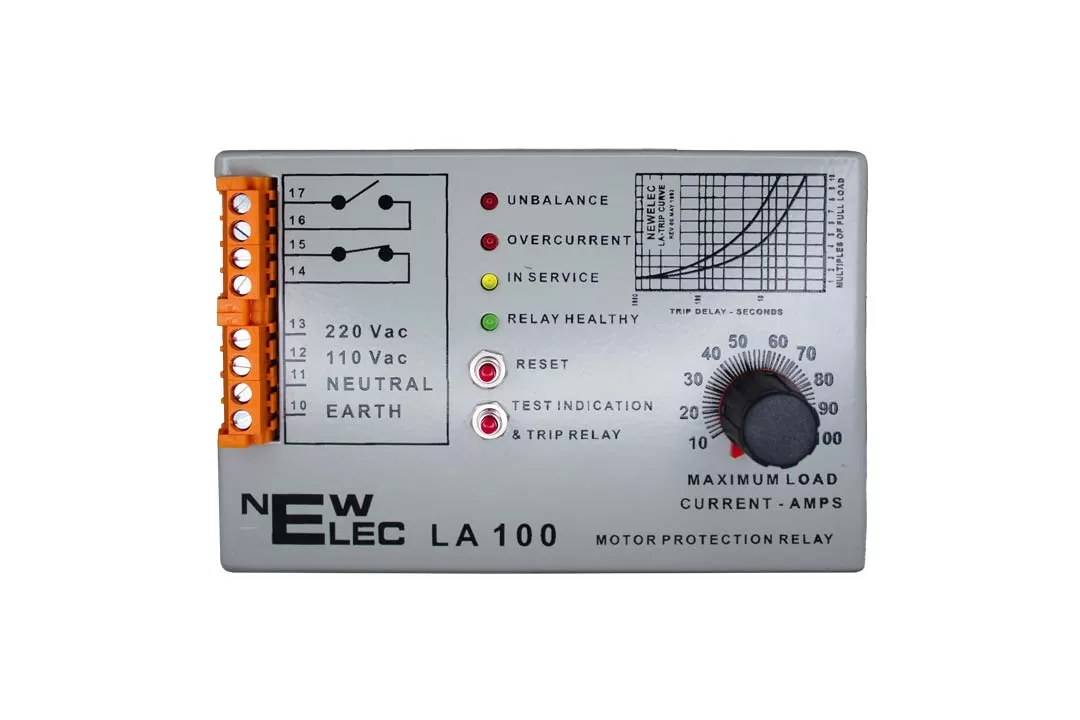
Yes, but special considerations are required. Some relays may not accurately sense current variations caused by VSDs. In such cases, electronic relays designed to work with VSDs are recommended for reliable protection. The Newlec LA Series Relays are often fitted below Variable Speed Drives (VSD).
What is the lifespan of a thermal overload relay?
The lifespan depends on:
- Operating Conditions: Extreme heat, vibration, or frequent overload events can reduce longevity.
- Maintenance: Regular inspections, cleaning, and recalibration extend the life of the relay. On average, a well-maintained relay can last several years under normal conditions.
Newelec has a design philosophy keeping long-term protection in mind, our relays are designed to last 25-30 years and allow for field upgrades.
How can I test the functionality of a thermal overload relay?
To test a thermal overload relay:
- Simulate an overload condition by increasing the motor load or using a test device or Newelec Front-End Software Simulator.
- Observe if the relay trips at the specified current.
- Check for proper reset functionality after the trip. Always follow the manufacturer’s testing procedures to ensure accurate results.
- Record Fault and Event records over a pre-determined period with NewElec’s Front-end recorder and export to excel for analysis.
What are common signs of a faulty overload relay?
Indicators of a faulty relay include:
- Motors failing to start or frequently tripping without apparent overloads.
- Delayed or no response to actual overload conditions.
- Burnt or discolored components indicating overheating or electrical damage.
Can overload relays be used in renewable energy applications?
Yes, overload relays are applicable in renewable energy systems, such as solar farms and wind turbines, where they protect motors in components like trackers, pumps, and cooling systems. The Newelec KG/KH Power Quality Monitoring Relay is your link between your solar farm or wind turbines and the substation. For renewable setups, electronic relays may offer better adaptability to fluctuating loads.
Frequently Asked Questions (FAQs)
Why is crusher motor protection so important in the mining industry?
Crusher motors operate under heavy loads, harsh conditions, and frequent voltage fluctuations. Without proper protection, they are prone to overheating, insulation failure, or burnout. Effective motor protection reduces downtime, extends equipment life, and lowers maintenance costs.
What role do protective relays play in safeguarding crusher motors?
Protective relays, such as NewElec’s KD Relay, continuously monitor motor conditions like overload, undervoltage, phase imbalance, and earth leakage. They can automatically shut down or adjust operations during unsafe conditions, preventing costly damage while ensuring operational continuity.
How does low-voltage protection benefit mining operations?
Low voltage is common in remote mining areas and can reduce motor efficiency or cause complete failure. Low-voltage protection relays disconnect the motor when voltage drops below safe levels and reconnect once conditions stabilise, preventing damage and maintaining reliable performance.
What maintenance practices help extend crusher motor life?
Regular inspections of bearings, lubrication systems, wiring, and ventilation are essential. Monitoring temperature and vibration levels helps detect early signs of wear, while periodic testing of protective relays ensures the system responds correctly to faults.
Can implementing motor protection reduce operational costs?
Yes. By preventing unexpected breakdowns, protection systems reduce downtime and repair expenses. For example, a mining site using the NewElec KD Relay cut downtime by 15% and lowered maintenance costs by 20%, demonstrating how proactive protection directly improves efficiency and profitability.


