
Why should motor protection be selected by application and not only motor size?
Motor size helps determine the electrical range, but the application determines the operating risk. A pump, conveyor, fan and crusher may require different protection priorities even if the motor ratings are similar. Load behaviour, environment, criticality and visibility requirements should all influence relay selection.
Motor size matters. No engineer, technician or panel builder would ignore full-load current, kW rating, voltage, duty or panel requirements when selecting motor protection.
But in a manufacturing plant, the motor nameplate only tells part of the story.
A 15 kW motor on a conveyor does not behave like a 15 kW motor on a pump. A fan motor has a different operating pattern to a crusher. A compressor may cycle differently from a mixer. The load, environment and production role often tell you more about the protection requirement than the motor size alone.
That is why manufacturing motor protection should start with a more practical question:
What is this motor actually doing in the plant?
NewElec’s manufacturing motor protection solutions are built around this reality. Manufacturing plants are not made up of identical motors performing identical work. They are made up of conveyors, pumps, fans, compressors, cranes, crushers, mixers and material handling systems, each with its own risk profile.
For South African and African manufacturing plants, this distinction is important. Many sites operate with a mix of older equipment, newer control panels, phased upgrades, harsh operating conditions and production pressures. Selecting protection only by motor size can lead to a relay that fits the rating, but not the application.
Motor size is only the starting point
Motor size helps narrow the relay range. It does not explain the operating conditions around the motor.
Two motors may have similar ratings, but one may run in a clean, dry panel environment while the other operates near water, dust, heat, vibration or process residue. One may support a non-critical auxiliary function. Another may affect a full production sequence if it becomes unavailable.
That difference matters.
A better selection process considers the motor together with the load, the process, the environment and the level of visibility the plant needs. NewElec’s motor protection relay product range can support the first stage of filtering by application, industry and protection requirement.
Before selecting a relay, it is worth asking:
- What does the motor drive?
- Is the load steady, variable, cyclic or heavy-duty?
- Is the motor exposed to water, dust, vibration, heat or chemicals?
- Is earth leakage or insulation deterioration a concern?
- Does the application need local indication only, or more detailed monitoring?
- Is the motor part of a wider control or automation strategy?
These questions prevent a common mistake: specifying protection as if all manufacturing motors behave the same way.
A simple auxiliary fan, a process pump, a high-load mixer and a critical conveyor may all need protection, but they do not all need the same level of protection, indication, fault visibility or control integration.
The load profile tells you what the motor is really facing
The load profile is one of the most useful clues in motor protection selection.
Some loads are predictable. Others change throughout the shift. Some motors start under light load, while others begin work against resistance. Some applications are sensitive to low-load conditions, while others face high mechanical stress.
A conveyor may experience fluctuating material weight. A pump may need to be protected when the process flow changes. A fan may be affected by filters, ducting or airflow restrictions. A mixer or crusher may face dense or uneven product feed.
The KD Series Relay is a useful example of practical motor protection for everyday industrial motor-driven applications, including machinery, pump protection systems and HVAC-type equipment. It is suited to applications where the plant needs dependable protection with useful measurement and diagnostic support, without necessarily moving straight into advanced control.
That does not mean the KD Series is the answer for every motor. It means it can make sense where the application needs reliable motor protection matched to a practical plant environment.
A load profile helps the plant decide whether the priority is compact protection, earth leakage protection, underload detection, operating visibility, advanced control, or integration into a broader plant system. It also helps avoid overengineering. Not every application needs the most advanced relay, but critical applications should not be left with protection that is too limited for the operating risk.
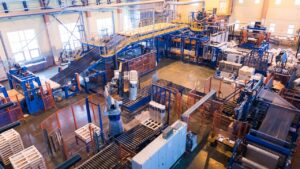
Conveyors and material handling equipment need application-specific thinking
Conveyors are often treated as simple motor-driven systems. In practice, they are rarely simple.
The condition of the belt, rollers, alignment, product load, start sequence and surrounding process all influence how the motor behaves. A conveyor feeding a production line also has a different business impact from a smaller transfer conveyor used less frequently.
For conveyor and material handling equipment, the protection decision should consider more than the motor rating. The plant should look at:
- Material weight and loading pattern
- Mechanical resistance
- Operating frequency
- Conveyor start sequence
- Whether the conveyor supports a critical production flow
- Whether the site needs simple local protection or wider system visibility
NewElec’s industry solutions page is useful here because it frames motor and pump protection around sector-specific operating demands, not only product categories. In manufacturing, the same relay discussion often changes depending on whether the equipment is used for light transfer, continuous production flow or high-dependency material handling.
Where the conveyor is straightforward and panel space is limited, compact protection may be enough. Where the conveyor is production-critical or part of a wider control system, the plant may need more advanced visibility and control.
This is the practical middle ground: do not under-protect a conveyor because it looks simple, but do not overcomplicate the system where the application does not justify it.
Pumps need protection that understands process conditions
Pump motors deserve their own protection conversation.
With pumps, the motor can be electrically present and still not be doing useful work in the process. A pump may be affected by flow conditions, suction problems, loss of media, cavitation risk, water ingress or insulation deterioration. In manufacturing plants, pumps may support cooling, process transfer, washdown, dosing, drainage or circulation. Those applications do not all carry the same risk.
This is why pump protection should not be selected on motor size alone. The plant should also consider whether underload, earth leakage, insulation condition and operating history matter to the application.
NewElec’s Pump Protection and Control System flyer speaks directly to mining, water and manufacturing applications, with emphasis on protecting the pump and motor against electrical and mechanical faults, including minimum-load conditions, overload, winding insulation deterioration and water ingress.
For manufacturing pump applications, this is often where a conversation with NewElec is valuable. The correct protection approach depends on whether the pump is a small auxiliary unit, a process-critical pump, a pump in a wet area, or part of a wider monitoring and control requirement.
For example, a cooling-water pump in a production line may require a different level of attention from a small utility pump. A washdown-area pump may need greater focus on earth leakage and insulation condition. A process pump that affects production flow may justify stronger diagnostic visibility. The motor size helps narrow the relay choice, but the pump’s role determines the protection priorities.
Fans, HVAC and ventilation equipment should not be an afterthought
Fans are easy to overlook because they often seem less mechanically demanding than crushers, conveyors or pumps.
But in manufacturing, fans may support ventilation, cooling, extraction, airflow control or process stability.
The risk is not always the size of the motor. It may be where the fan is installed, what it supports, and how visible its operation needs to be.
A fan in a dusty environment may need different protection thinking from a fan in a cleaner utility area. A fan linked to extraction or cooling may carry a higher operational risk than one used for general airflow. Maintenance changes can also affect fan performance, especially where direction, airflow path, filters or mechanical resistance have changed.
The MA Series Relay and NewCode Relay is relevant for many small to medium-sized motor applications where compact motor protection, overload protection and earth leakage protection are important. It is positioned for applications such as pumps, compressors, conveyors, HVAC equipment and fans.
In this context, the MA Series and NewCode Motor Protection Relay should not be treated as a simple alternative to every other relay. A more useful way to frame it is this: where a plant needs compact protection with earth leakage and overload functionality for smaller motor applications, MA and NewCode may be part of the discussion.
Fan and ventilation applications also remind us why application context matters. The plant may not need a complex control solution for every fan. But where the fan supports cooling, extraction, safe working conditions or process continuity, it should not be selected as an afterthought either.
Heavy-duty equipment needs more than a nameplate check
Crushers, mixers and other high-load manufacturing equipment put different demands on the motor and protection system.
The challenge is not only electrical. It is mechanical, operational and process-related. Dense product, uneven feed, binding, product build-up, long run-up conditions or sudden changes in resistance can all affect how the motor performs.
For these applications, the engineer should understand how the equipment behaves in normal production, not only how the motor appears on paper.
A heavy-duty motor protection discussion should include:
- How the machine starts
- Whether it starts under load
- How variable the process feed is
- Whether mechanical resistance changes during the shift
- How important the equipment is to production flow
- Whether maintenance teams need operating history or status visibility
- Whether the application may later need control system integration
For high-load or process-sensitive applications, NewElec’s NewCode Relay becomes relevant where programmable motor protection, control, local or remote monitoring and process-driven visibility are required.
Again, the point is not to force an advanced relay into every high-load application. The point is to match the relay capability to the operating reality of the equipment.
A mixer in a low-criticality batch process may need a different approach from a crusher that affects the entire production stream. A large motor is not automatically a candidate for the most advanced option. A smaller motor in a critical position may deserve more careful protection planning than its size suggests.
Harsh environments change the protection requirement
Manufacturing plants are rarely clean, controlled environments from end to end.
Some motors operate near water. Others are exposed to dust, heat, chemicals, vibration, product residue or washdown routines. Cables, glands, terminals and enclosures age differently depending on where they are installed.
This matters because a motor in a harsh environment may need more careful protection than a larger motor in a clean utility area.
Earth leakage protection, insulation monitoring, local indication and maintenance accessibility become more important when the installation is exposed to moisture, contamination or physical wear. NewElec’s GA Series Earth Leakage Relay page is a useful related resource for understanding earth fault protection in industrial and commercial systems.
For manufacturing teams, the lesson is simple: do not let motor size distract from environmental risk. A modest motor in a wet, dusty or safety-sensitive part of the plant may deserve more attention than its kilowatt rating suggests.
This is particularly relevant in older plants, where infrastructure may have been adapted over time. Cables may have been extended, panels may have been modified, and plant conditions may have changed since the original motor protection was installed. In those cases, a protection review should consider the current operating environment, not only the original design.
Not every motor needs the same level of visibility
There is a difference between basic protection, useful indication, diagnostic visibility and process control.
Not every motor needs remote monitoring, communication or programmable control. In many applications, correct protection, clear indication and reliable operation are enough.
But as manufacturing plants become more process-driven, visibility starts to matter more.
Maintenance teams may need to see what is happening across multiple motor circuits. Plant managers may want better information from older MCCs. Engineers may want a practical route towards improved control without replacing the entire installation. This is where motor protection begins to overlap with operational visibility.
NewElec’s Why Wait to Automate™ approach is relevant for plants that want to modernise older motor control systems without a complete infrastructure overhaul. The page positions NewElec’s automation and monitoring solutions as a way to retrofit visibility and control into existing motor control centres.
This is especially useful for South African manufacturing plants where budgets, legacy infrastructure and production disruption must all be considered. The first step may not be full automation. It may be better protection, better visibility and a clearer upgrade path.
A practical upgrade path may start with critical motors, then move towards standardised protection across equipment groups, then introduce programmable control where the process justifies it. This avoids the pressure of doing everything at once and allows the plant to improve reliability in stages.
A practical way to group manufacturing motors
A manufacturing site with mixed equipment should avoid one blanket protection approach.
A more practical method is to group motors by role and risk.
Standard support motors
These are usually smaller or less critical motors that support general plant functions. They may need compact, reliable protection and straightforward indication.
Examples may include smaller fans, auxiliary pumps or non-critical support equipment.
Application-sensitive motors
These motors need protection that reflects how the equipment behaves. Pumps, conveyors, fans and material handling equipment often fall into this group because the load condition matters.
For these motors, application behaviour should guide the protection conversation.
Production-critical motors
These motors influence output, process flow, delivery commitments or safety. They may justify stronger diagnostic visibility, more careful configuration and closer maintenance review.
Examples may include key process pumps, primary conveyors, compressors, mixers or critical material handling equipment.
Automation-ready motors
These motors sit inside a broader control strategy. They may need programmable protection, communication capability or integration with plant monitoring systems.
NewElec’s Knowledge Hub is a useful internal resource to support this kind of decision-making because it brings together product deep dives, Q&A content, comparison guides and industry-focused resources.
This grouping method helps avoid two extremes: using a highly advanced relay where simple protection is enough, or using basic protection where the plant needs better visibility and control.
It also helps standardise decision-making across departments. Electrical teams, maintenance teams, production managers and consultants can use the same logic when reviewing equipment. That makes protection planning more consistent and easier to justify.
Where KD Series, MA Series and NewCode fit into the conversation
This is not a product comparison. It is a way to think about application fit.
The KD Series Relay can be considered where the plant needs practical motor protection, measurement and diagnostic support for common manufacturing motor applications.
The MA Series Relay can be considered where compact motor protection with earth leakage and overload protection is required for small to medium-sized motors.
The NewCode Relay can be considered where the application needs programmable protection, motor control, monitoring capability or a more automation-ready approach.
The better question is not, “Which relay is best?” The better question is, “What does this application need from the protection system?”
That is the decision that leads to better engineering outcomes.
In some plants, all three levels of protection may have a role. A plant may use compact protection for smaller equipment, practical diagnostic protection for common motor-driven applications, and programmable protection and control for process-critical or automation-ready systems. That is normal. Manufacturing sites are mixed environments, so the protection strategy should reflect that mix.
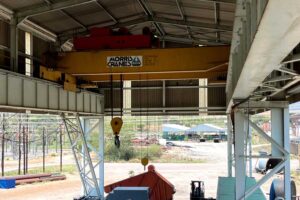
Questions to ask before selecting motor protection
Before selecting a relay for a manufacturing application, start with the plant reality, then move to the product options.
Ask:
- What equipment does the motor drive?
- How critical is this equipment to production?
- Is the load stable, variable, cyclic or high impact?
- Is the motor exposed to water, dust, heat, chemicals or vibration?
- Is underload protection important for the application?
- Is earth leakage protection important for the environment?
- Does the team need basic indication, diagnostic visibility or remote monitoring?
- Is the motor standalone, panel-based or part of a wider control system?
- Will this installation need to support future upgrades?
The NewElec product range can then be reviewed with a clearer understanding of what the plant actually needs.
This approach makes the selection process more grounded. It also helps engineers and maintenance teams avoid over-specifying for simple motors or under-specifying for critical applications.
Choosing protection around the real application
Manufacturing motor protection should not be selected from the nameplate alone.
The nameplate tells you where to begin. The application tells you what matters.
A conveyor, pump, fan, compressor, crusher and mixer may all use electric motors, but they do not create the same operating demands. A motor in a clean, low-risk area does not need the same thinking as one in a wet, dusty or high-load environment. A standalone motor does not need the same level of visibility as one connected to a process-driven production line.
By choosing motor protection around the real manufacturing load, plants can make better engineering decisions, avoid unnecessary complexity and support long-term production reliability.
For application-specific guidance, speak to NewElec about the right relay approach for your equipment, environment and control requirements.
Speak to NewElec: Contact NewElec Today
Frequently Asked Questions (FAQs)
What should manufacturers consider before choosing a motor protection relay?
Manufacturers should consider what the motor drives, how the load behaves, whether the equipment is production-critical, whether the environment is wet or dusty, whether earth leakage or underload protection is important, and whether the plant needs local indication, diagnostics or communication capability.
Which manufacturing applications may need underload protection?
Underload protection is particularly relevant for pump and fluid-handling applications where low load may indicate dry-run conditions, loss of media, loss of prime or process flow problems. It may also be useful where a broken belt, failed coupling or loss of mechanical load could affect the process.
When is compact motor protection suitable in manufacturing?
Compact motor protection may be suitable for smaller or less complex motor applications where reliable overload, earth leakage or local indication is needed without advanced communication or control requirements. The final choice should still consider the load, environment and production importance of the motor.
When should a plant consider programmable motor protection and control?
Programmable protection and control become more relevant when the motor is part of a process-driven environment, automation-ready installation, production-critical system or application where local and remote visibility are important. These applications may benefit from more advanced monitoring, settings flexibility and communication capability.
How can NewElec help with motor protection selection for manufacturing?
NewElec can assist with application-specific guidance by considering motor size, load profile, operating environment, protection needs and future control requirements. This helps manufacturing teams select a relay approach that fits the real plant application rather than relying on motor rating alone.


